http://www.loc.gov/teachers/classroommaterials/presentationsandactivities/activities/political-cartoon/cag.html
From what this guide says, I was pretty close to the actual way of doing it, but one major thing I forgot is exaggeration. Political cartoonists use exaggeration as a way to identify specific people by using the most defined features and making them more defined.
 |
| Philippines Conflict Political Cartoon |
 |
| Spanish American War Political Cartoon |
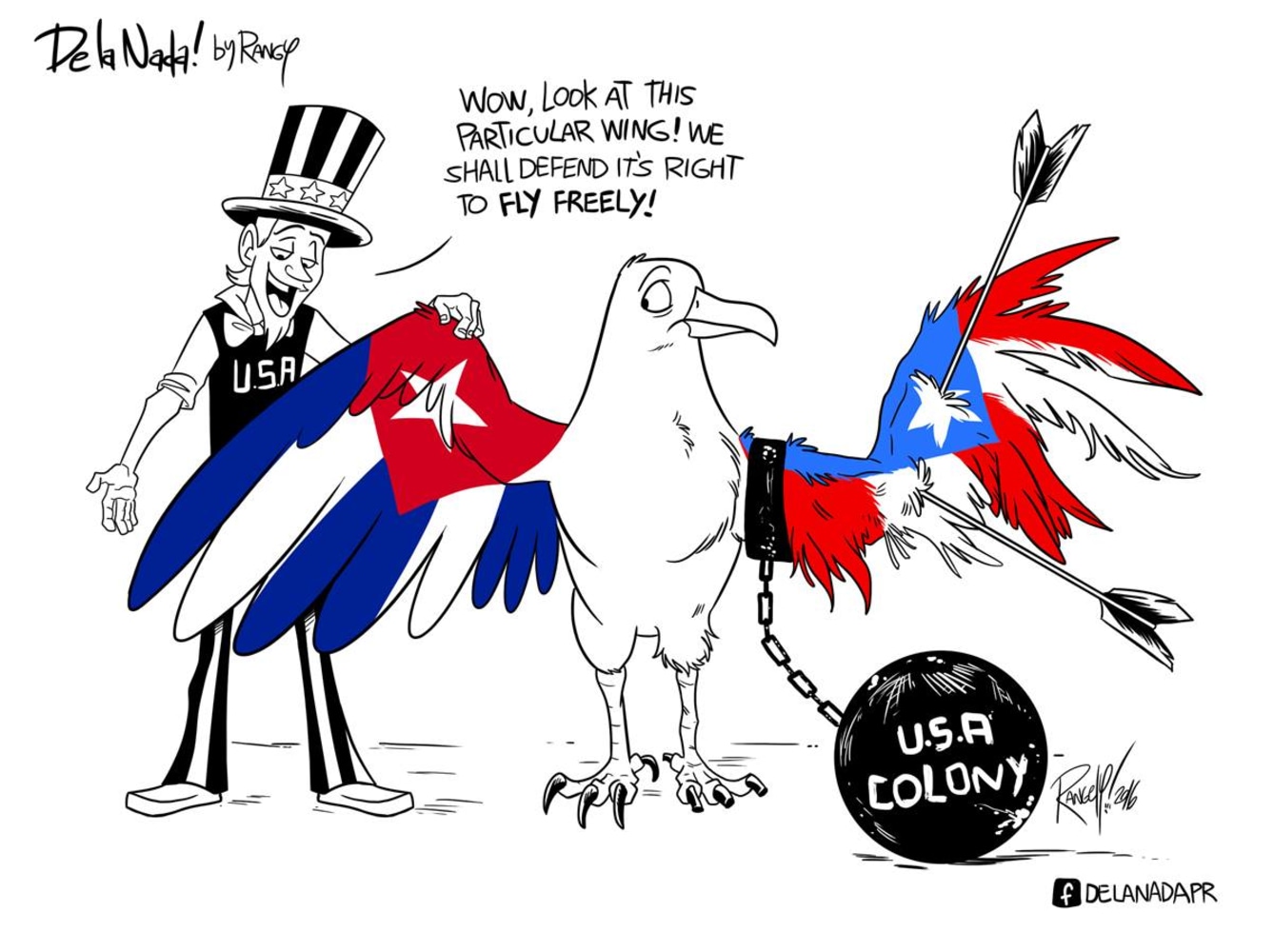 |
| Colonization Political Cartoon |
2. This cartoon illustrates the United States "protecting" Cuba from Spain as we entered the Spanish-American War. It shows Uncle Sam, representing America, protecting a woman with a label "Cuba" with an American flag, from the Cuban patriots. There isn't too much to say about this one, but it is clear that this represents the United States helping the Cuban rebellion against Spain.
3. This last cartoon is about effect colonization has on the country as a whole. The artists makes it very clear that colonization is holding down the bird that represents the country's freedom, and that the bird cannot fly without both wings. It also emphasizes that Uncle Sam, who in this case represents the US government, is neglecting the broken wing, and is only paying attention to the perfectly good wing.

Emillio Aguinaldo was the leader of the Philippines government not Cuba. I agreed with every other thing though.
ReplyDeleteThis looks accurate and a good analysis of each cartoon.
ReplyDelete