Thursday, December 15, 2016

Thursday, December 8, 2016
Book Cover

This is a book cover designed to show how large of an impact the industrial age has made on the world, as well as captivate the reader. The book talks about the innovations of the industrial age, and the factors that started the industrial age. While the book cover is simple, it does its job of telling the reader that industrialization has made an impact not only nationally, but globally
Monday, December 5, 2016

Wednesday, November 30, 2016
Supplier Responsibility and Supply Chain Management
http://www.apple.com/supplier-responsibility/
While I was researching the work quality at Apple, they claim to have a strict "Workers' Rights are Human Rights" policy, stating that excessive work hours, underage labor, and bonded labor are not acceptable for their company. They also state that they are going deep within the supply chain to make sure their materials are acceptable. They even give a yearly progress report to the public, telling how they have lived up to their code of conduct. This makes me wonder whether or not these progress reports are accurate
While I was researching the work quality at Apple, they claim to have a strict "Workers' Rights are Human Rights" policy, stating that excessive work hours, underage labor, and bonded labor are not acceptable for their company. They also state that they are going deep within the supply chain to make sure their materials are acceptable. They even give a yearly progress report to the public, telling how they have lived up to their code of conduct. This makes me wonder whether or not these progress reports are accurate
Tuesday, November 22, 2016
Supply Chain Management
Supply Chain Management is the oversight of materials, information, and finances as they move in a process from supplier to manufacturer to wholesaler to retailer to consumer.
http://searchmanufacturingerp.techtarget.com/definition/supply-chain-management
http://searchmanufacturingerp.techtarget.com/definition/supply-chain-management
Friday, November 18, 2016
Smoke Signals Essay
The history of the Native Americans, in relation to the whites encroaching on their territory and their way of living, contains a plethora of trials and hardships, as well as triumph and glory. After being treated so horribly by the whites and constantly being discriminated against, the Indians are given their rights to exercise their culture. But while legally they are admitted into the United States, the Native Americans still suffer plenty of hardships socially. This is extremely prevalent in the film Smoke Signals. This film shows how while the Native Americans are allowed to legally thrive in the country, the social injustice of the systematic oppression is still alive. This is shown through the historical grudges from the Native Americans, as well as the imagery of struggle throughout the film.
Throughout the film, they illustrate multiple references to the historical trials of the Native Americans. These references are shown in order to illuminate the fact that there is still some tension, socially and politically, between the white people and the Native Americans. There is one scene that comes displays this quite vividly. During the scene where Thomas is having a conversation with a white Olympic gymnast from Mississippi. She tells Thomas how difficult it is to be a gymnast and how hard her life is. Then Victor chimes in and tells her that she has got it easy and that he is the one who has a hard life. While this is relevant on a more personal level, this is also important to the understanding of their cultures and ancestry. This conflict between the gymnast and Victor is also referring to the past, and how the Native Americans were truly the ones who had it hard, due to the constant oppression from the white people. He is saying that the white people have no room to complain, for they were privileged and free, while the Native Americans were far from that. This shows that Victor, who in this scene represents the Native Americans, is still holding the white people accountable for their actions of discrimination in the past.
This film contains a large amount of imagery and symbolism hinting towards struggle and hardships that the Native Americans have faced. To start, the scene with the two Native American women driving in reverse, but going forward symbolizes the will to push through the hardships. While it is difficult to drive a car only in reverse, it is doable, and this represents how the Native Americans are still struggling to be treated equal, but they are pushing through. Another example would be Victor's mother. During one scene, Victor is having a conversation with his mother about how Thomas wanted to go with Victor on his journey. His mother is kneading bread, and is struggling to do so on account of her arthritic hands. At this point, she tells Victor that it is his decision whether or not he wants to let Thomas go with him. But the film is using this symbolism of her arthritis to emphasize that with struggle comes reward. This illustrates how the Native Americans are still fighting for their social justice, and that there will be a reward of freedom and acceptances after the struggle.
The Native Americans have faced many difficulties dealing with the mass hate, and then attempted assimilation of their people. But they never gave up, and it is slowly paying off in the end. This film uses these hints of fighting for what you believe in to illuminate this concept.
Throughout the film, they illustrate multiple references to the historical trials of the Native Americans. These references are shown in order to illuminate the fact that there is still some tension, socially and politically, between the white people and the Native Americans. There is one scene that comes displays this quite vividly. During the scene where Thomas is having a conversation with a white Olympic gymnast from Mississippi. She tells Thomas how difficult it is to be a gymnast and how hard her life is. Then Victor chimes in and tells her that she has got it easy and that he is the one who has a hard life. While this is relevant on a more personal level, this is also important to the understanding of their cultures and ancestry. This conflict between the gymnast and Victor is also referring to the past, and how the Native Americans were truly the ones who had it hard, due to the constant oppression from the white people. He is saying that the white people have no room to complain, for they were privileged and free, while the Native Americans were far from that. This shows that Victor, who in this scene represents the Native Americans, is still holding the white people accountable for their actions of discrimination in the past.
This film contains a large amount of imagery and symbolism hinting towards struggle and hardships that the Native Americans have faced. To start, the scene with the two Native American women driving in reverse, but going forward symbolizes the will to push through the hardships. While it is difficult to drive a car only in reverse, it is doable, and this represents how the Native Americans are still struggling to be treated equal, but they are pushing through. Another example would be Victor's mother. During one scene, Victor is having a conversation with his mother about how Thomas wanted to go with Victor on his journey. His mother is kneading bread, and is struggling to do so on account of her arthritic hands. At this point, she tells Victor that it is his decision whether or not he wants to let Thomas go with him. But the film is using this symbolism of her arthritis to emphasize that with struggle comes reward. This illustrates how the Native Americans are still fighting for their social justice, and that there will be a reward of freedom and acceptances after the struggle.
The Native Americans have faced many difficulties dealing with the mass hate, and then attempted assimilation of their people. But they never gave up, and it is slowly paying off in the end. This film uses these hints of fighting for what you believe in to illuminate this concept.
Thursday, November 10, 2016
Snapshot of Carlos Nakai Native American Music
I have learned from take a brief look at Carlos Nakai, a Native American flautist of the Navajo tribe, that the reason he takes the Native American style of music and blends it with more modern and popular styles in order to create something unique and appealing to modern society while still retaining the ability to spread his culture. I also learned that his inspiration is his want to spread his culture throughout the world with his music.
https://www.youtube.com/watch?v=19nm5_nAwQg
https://www.youtube.com/watch?v=19nm5_nAwQg
Monday, October 31, 2016
The West: From the primary sources
I've had the opportunity to investigate several newspapers from 1866-1880 in the west. I've found a story in Sacramento about three children who were struck in the head at the same time and drowned. I also found a Sacramento newspaper following the president at the time (Rutherford B. Hayes), who was in Connecticut at the time visiting the bones of his ancestors. There was a story from that same newspaper about three men who were killed by a lightning strike.
Link to Newspaper
Link to Newspaper
 |
| Lightning bolt |
 |
| The church that President Hayes visited |
 |
| Rutherford B. Hayes |
Wednesday, October 12, 2016
Summary
In these past endeavors, I have learned the gravity of the situations that we researches, and how serious human trafficking is. It is very important to learn from slavery in the past, while it is also important to acknowledge its existence in the present. This issue has showed me that while "slavery" in America might not exist, the concept and its practices are still around, but take a different form
Monday, October 10, 2016
Organ Trafficking
http://www.webmd.com/a-to-z-guides/organ-transplant-after-the-transplant#1 -
http://ksfm.cbslocal.com/2012/04/23/how-much-are-your-body-parts-worth-on-the-black-market
http://www.huffingtonpost.com/news/organ-harvesting/
http://www.huffingtonpost.com/anne-speckhard/isis-defector-reports-on-sale-of-organs_b_8897708.html
Kidney - $262,000
Liver - $157,000
Heart - $119,000
Small Intestine - $2,519
Pair of Eyeballs - $1,525
Coronary Artery - $1,525
Gallbladder - $1,219
Skull with Teeth - $1,200
Scalp - $607
Spleen - $508
Stomach - $508
Hand and Forearm - $385
Pint of Blood - $337
Skin (per square inch) - $10
Caused by the massive supply demand gap
20-30 people die every day waiting for an organ
ARTIFICIAL ORGANS
I think that the supply demand gap is so large with this situation that the only solution would be to research how to manufacture artificial organs. This would close the supply demand gap exponentially and save a lot of lives and money.
http://ksfm.cbslocal.com/2012/04/23/how-much-are-your-body-parts-worth-on-the-black-market
http://www.huffingtonpost.com/news/organ-harvesting/
http://www.huffingtonpost.com/anne-speckhard/isis-defector-reports-on-sale-of-organs_b_8897708.html
Kidney - $262,000
Liver - $157,000
Heart - $119,000
Small Intestine - $2,519
Pair of Eyeballs - $1,525
Coronary Artery - $1,525
Gallbladder - $1,219
Skull with Teeth - $1,200
Scalp - $607
Spleen - $508
Stomach - $508
Hand and Forearm - $385
Pint of Blood - $337
Skin (per square inch) - $10
Caused by the massive supply demand gap
20-30 people die every day waiting for an organ
ARTIFICIAL ORGANS
I think that the supply demand gap is so large with this situation that the only solution would be to research how to manufacture artificial organs. This would close the supply demand gap exponentially and save a lot of lives and money.
Tuesday, September 27, 2016
Glory and Twelve Years In Class Essay
It is possible to develop skills in analyzing and learn more about a specific subject by watching movies and doing a little research. While movies are a different form of media than books or novels, this does not mean that it is, in any way, lesser than a book. Movies are made to give the audience a more tangible grasp on the concept that is being illustrated by giving you more than just words on a page. It gives you the ability to actually see with your own eyes and hear with your own ears what is happening, rather than having to use your imagination to fill in the blanks. And while this does require your film to be as historically accurate as possible, if done right film could be more informative and productive than literature. To further delve into this idea of productivity in books and movies, we will be taking a look at two different historical films, Glory and 12 Years a Slave.
12 Years a Slave was originally a novel written by Solomon Northup, a freed black man who was kidnapped and sold into slavery for twelve years in 1841. It was then made into a film in 2013. The movie was not made for the sole purpose of entertainment, but rather to educate people further than the autobiography. While the book provided the journey inside the mind of Northup, the movie provided a more tangible "version" of the story. The audience could see the way that people were treated in those times, rather than just reading it on paper. They could hear the struggles and pains of a slave during those times, rather than just reading it. It provides a stronger connection between the characters and the audience, which further helps the audience grasp the gravity of what was going on back then. The only downside to making a movie from the autobiography would be formatting issues. The director has to make a decision on what he deems important and crucial to be represented in the movie, which can only last a couple of hours. Steve McQueen, the director for 12 Years a Slave, states that he had to change the layout for the movie, as not to exhaust the viewer from the constant turmoil of being a slave for twelve years. Changing the layout of the book for the film is not nearly as harmful as changing the actual information that is crucial to understanding and empathizing with what was going on at that time. Also, this was an account of a single experience of kidnapping and selling slaves. This was not the only instance of this happening. According to the New York Daily News, "audiences should realize that the kidnapping of northern free blacks was common." This indicated that the hard evidence should vary within each individual situation. If the movie was made about an event that only happened once in history, there is more of a demand for factual evidence.
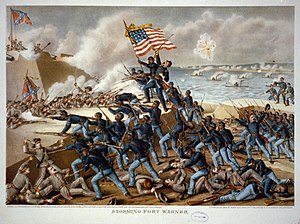
Glory is a film made about the 54th regiment during the Civil War, the first regiment composed of African Americans. For this film, there was no novel to reference when making historical claims, so they had to go on historical evidence that they researched. Now this film was made about a singular incident, so there is no other way to interpret this. It calls for completely factual evidence, unless it is supposed to be a film purely based on entertainment. In this instance, the film does meet this requirement, giving the viewers actual dates and locations where these instances happened. But there are some things that the director has to change in order to make the film interesting while still keeping it factual and historically accurate. The first battle in the film (the Battle of Antietum) is portrayed in only a couple minutes, when in fact, the battle for much longer than this. The director cannot put in every single bit of information and every event at full length, or else the movie would last for ages. This is why in order to understand the subject, you have to do a little research on your own.
Movies are not a credible source for factual information when composing an essay or report on a historic field. However, they provide a phenomenal background, and they allow the viewers to be able to empathize with the historical figures a lot easier than just reading a textbook or novel. If you conduct your own research for the facts, a movie is a great way to paint the picture for you and turn factual information into a story that sticks with you. This is something that memorizing information from a textbook cannot provide. A movie gives the information emotion, which is also allows empathy, a quality that all who call themselves historians should have. To learn more about what it was like in the past, we must put ourselves in the shoes of those in the past. And movies are the prime form of media to provide that for its viewers.
12 Years a Slave was originally a novel written by Solomon Northup, a freed black man who was kidnapped and sold into slavery for twelve years in 1841. It was then made into a film in 2013. The movie was not made for the sole purpose of entertainment, but rather to educate people further than the autobiography. While the book provided the journey inside the mind of Northup, the movie provided a more tangible "version" of the story. The audience could see the way that people were treated in those times, rather than just reading it on paper. They could hear the struggles and pains of a slave during those times, rather than just reading it. It provides a stronger connection between the characters and the audience, which further helps the audience grasp the gravity of what was going on back then. The only downside to making a movie from the autobiography would be formatting issues. The director has to make a decision on what he deems important and crucial to be represented in the movie, which can only last a couple of hours. Steve McQueen, the director for 12 Years a Slave, states that he had to change the layout for the movie, as not to exhaust the viewer from the constant turmoil of being a slave for twelve years. Changing the layout of the book for the film is not nearly as harmful as changing the actual information that is crucial to understanding and empathizing with what was going on at that time. Also, this was an account of a single experience of kidnapping and selling slaves. This was not the only instance of this happening. According to the New York Daily News, "audiences should realize that the kidnapping of northern free blacks was common." This indicated that the hard evidence should vary within each individual situation. If the movie was made about an event that only happened once in history, there is more of a demand for factual evidence.
Glory is a film made about the 54th regiment during the Civil War, the first regiment composed of African Americans. For this film, there was no novel to reference when making historical claims, so they had to go on historical evidence that they researched. Now this film was made about a singular incident, so there is no other way to interpret this. It calls for completely factual evidence, unless it is supposed to be a film purely based on entertainment. In this instance, the film does meet this requirement, giving the viewers actual dates and locations where these instances happened. But there are some things that the director has to change in order to make the film interesting while still keeping it factual and historically accurate. The first battle in the film (the Battle of Antietum) is portrayed in only a couple minutes, when in fact, the battle for much longer than this. The director cannot put in every single bit of information and every event at full length, or else the movie would last for ages. This is why in order to understand the subject, you have to do a little research on your own.
Movies are not a credible source for factual information when composing an essay or report on a historic field. However, they provide a phenomenal background, and they allow the viewers to be able to empathize with the historical figures a lot easier than just reading a textbook or novel. If you conduct your own research for the facts, a movie is a great way to paint the picture for you and turn factual information into a story that sticks with you. This is something that memorizing information from a textbook cannot provide. A movie gives the information emotion, which is also allows empathy, a quality that all who call themselves historians should have. To learn more about what it was like in the past, we must put ourselves in the shoes of those in the past. And movies are the prime form of media to provide that for its viewers.
This provided me with the background information on how historically accurate 12 Years a Slave was.
This article delved into what decisions the director made in making the film 12 Years a Slave
This article showed me how the director had to change things in order to make an entertaining film.
Ashbrook (Ashland University) - “History and the Movies: The Patriot and Glory
This was a review from Ashland University explain the historical inaccuracies of Glory and why this movie was successful
Ashbrook (Ashland University) - “History and the Movies: The Patriot and Glory
This was a review from Ashland University explain the historical inaccuracies of Glory and why this movie was successful
This was a history archive that I used to confirm most of the historical statements made in the film Glory
 |
| The films depiction of Solomon Northup from 12 Years a Slave |

 |
| A visual aid to show the importance of empathy |
 |
| A depiction of the differences between seeing a movie and reading a book |
Glory and Twelve Years In Class Essay
It is possible to develop skills in analyzing and learn more about a specific subject by watching movies and doing a little research. While movies are a different form of media than books or novels, this does not mean that it is, in any way, lesser than a book. Movies are made to give the audience a more tangible grasp on the concept that is being illustrated by giving you more than just words on a page. It gives you the ability to actually see with your own eyes and hear with your own ears what is happening, rather than having to use your imagination to fill in the blanks. And while this does require your film to be as historically accurate as possible, if done right film could be more informative and productive than literature. To further delve into this idea of productivity in books and movies, we will be taking a look at two different historical films, Glory and 12 Years a Slave.
12 Years a Slave was originally a novel written by Solomon Northup, a freed black man who was kidnapped and sold into slavery for twelve years in 1841. It was then made into a film in 2013. The movie was not made for the sole purpose of entertainment, but rather to educate people further than the autobiography. While the book provided the journey inside the mind of Northup, the movie provided a more tangible "version" of the story. The audience could see the way that people were treated in those times, rather than just reading it on paper. They could hear the struggles and pains of a slave during those times, rather than just reading it. It provides a stronger connection between the characters and the audience, which further helps the audience grasp the gravity of what was going on back then. The only downside to making a movie from the autobiography would be formatting issues. The director has to make a decision on what he deems important and crucial to be represented in the movie, which can only last a couple of hours. Steve McQueen, the director for 12 Years a Slave, states that he had to change the layout for the movie, as not to exhaust the viewer from the constant turmoil of being a slave for twelve years. Changing the layout of the book for the film is not nearly as harmful as changing the actual information that is crucial to understanding and empathizing with what was going on at that time. Also, this was an account of a single experience of kidnapping and selling slaves. This was not the only instance of this happening. According to the New York Daily News, "audiences should realize that the kidnapping of northern free blacks was common." This indicated that the hard evidence should vary within each individual situation. If the movie was made about an event that only happened once in history, there is more of a demand for factual evidence.
Glory is a film made about the 54th regiment during the Civil War, the first regiment composed of African Americans. For this film, there was no novel to reference when making historical claims, so they had to go on historical evidence that they researched. Now this film was made about a singular incident, so there is no other way to interpret this. It calls for completely factual evidence, unless it is supposed to be a film purely based on entertainment. In this instance, the film does meet this requirement, giving the viewers actual dates and locations where these instances happened. But there are some things that the director has to change in order to make the film interesting while still keeping it factual and historically accurate. The first battle in the film (the Battle of Antietum) is portrayed in only a couple minutes, when in fact, the battle for much longer than this. The director cannot put in every single bit of information and every event at full length, or else the movie would last for ages. This is why in order to understand the subject, you have to do a little research on your own.
Movies are not a credible source for factual information when composing an essay or report on a historic field. However, they provide a phenomenal background, and they allow the viewers to be able to empathize with the historical figures a lot easier than just reading a textbook or novel. If you conduct your own research for the facts, a movie is a great way to paint the picture for you and turn factual information into a story that sticks with you. This is something that memorizing information from a textbook cannot provide. A movie gives the information emotion, which is also allows empathy, a quality that all who call themselves historians should have. To learn more about what it was like in the past, we must put ourselves in the shoes of those in the past. And movies are the prime form of media to provide that for its viewers.
12 Years a Slave was originally a novel written by Solomon Northup, a freed black man who was kidnapped and sold into slavery for twelve years in 1841. It was then made into a film in 2013. The movie was not made for the sole purpose of entertainment, but rather to educate people further than the autobiography. While the book provided the journey inside the mind of Northup, the movie provided a more tangible "version" of the story. The audience could see the way that people were treated in those times, rather than just reading it on paper. They could hear the struggles and pains of a slave during those times, rather than just reading it. It provides a stronger connection between the characters and the audience, which further helps the audience grasp the gravity of what was going on back then. The only downside to making a movie from the autobiography would be formatting issues. The director has to make a decision on what he deems important and crucial to be represented in the movie, which can only last a couple of hours. Steve McQueen, the director for 12 Years a Slave, states that he had to change the layout for the movie, as not to exhaust the viewer from the constant turmoil of being a slave for twelve years. Changing the layout of the book for the film is not nearly as harmful as changing the actual information that is crucial to understanding and empathizing with what was going on at that time. Also, this was an account of a single experience of kidnapping and selling slaves. This was not the only instance of this happening. According to the New York Daily News, "audiences should realize that the kidnapping of northern free blacks was common." This indicated that the hard evidence should vary within each individual situation. If the movie was made about an event that only happened once in history, there is more of a demand for factual evidence.
Glory is a film made about the 54th regiment during the Civil War, the first regiment composed of African Americans. For this film, there was no novel to reference when making historical claims, so they had to go on historical evidence that they researched. Now this film was made about a singular incident, so there is no other way to interpret this. It calls for completely factual evidence, unless it is supposed to be a film purely based on entertainment. In this instance, the film does meet this requirement, giving the viewers actual dates and locations where these instances happened. But there are some things that the director has to change in order to make the film interesting while still keeping it factual and historically accurate. The first battle in the film (the Battle of Antietum) is portrayed in only a couple minutes, when in fact, the battle for much longer than this. The director cannot put in every single bit of information and every event at full length, or else the movie would last for ages. This is why in order to understand the subject, you have to do a little research on your own.
Movies are not a credible source for factual information when composing an essay or report on a historic field. However, they provide a phenomenal background, and they allow the viewers to be able to empathize with the historical figures a lot easier than just reading a textbook or novel. If you conduct your own research for the facts, a movie is a great way to paint the picture for you and turn factual information into a story that sticks with you. This is something that memorizing information from a textbook cannot provide. A movie gives the information emotion, which is also allows empathy, a quality that all who call themselves historians should have. To learn more about what it was like in the past, we must put ourselves in the shoes of those in the past. And movies are the prime form of media to provide that for its viewers.
This provided me with the background information on how historically accurate 12 Years a Slave was.
This article delved into what decisions the director made in making the film 12 Years a Slave
This article showed me how the director had to change things in order to make an entertaining film.
Ashbrook (Ashland University) - “History and the Movies: The Patriot and Glory
This was a review from Ashland University explain the historical inaccuracies of Glory and why this movie was successful
Ashbrook (Ashland University) - “History and the Movies: The Patriot and Glory
This was a review from Ashland University explain the historical inaccuracies of Glory and why this movie was successful
This was a history archive that I used to confirm most of the historical statements made in the film Glory
 |
| The films depiction of Solomon Northup from 12 Years a Slave |
|
| A visual aid to show the importance of empathy |
|
| A depiction of the differences between seeing a movie and reading a book |
Wednesday, September 14, 2016
Reflection on Paraphrasing Practice
In this activity, I learned how to paraphrase cohesively and properly, as well as learning how and when to use it. It is used when explaining the general idea of a certain passage, but not copying the passage word for word. It is a nice informal "go between" for quoting and summarizing. I also learned how to correctly give credit where credit is due.
I understand these things:
Only use a direct quote when it adds power and style to my writing.
Always make it clear, from context, that I understand the full meaning of the quote.
Whether I quote or paraphrase, I must always be transparent about the source and how I'm using it .
If i use another author's exact words or phrases, to any extent, I have to use quotation marks and give credit.
If I use another author's presentation of facts or ideas, but put their ideas in my own words, (paraphrase) I better have a good reason for doing so, and I MUST give credit.
Hyperlinking is so easy, there is no excuse for not being transparent about my sources
I understand these things:
Only use a direct quote when it adds power and style to my writing.
Always make it clear, from context, that I understand the full meaning of the quote.
Whether I quote or paraphrase, I must always be transparent about the source and how I'm using it .
If i use another author's exact words or phrases, to any extent, I have to use quotation marks and give credit.
If I use another author's presentation of facts or ideas, but put their ideas in my own words, (paraphrase) I better have a good reason for doing so, and I MUST give credit.
Hyperlinking is so easy, there is no excuse for not being transparent about my sources
Practicing Incorporating a Quotation
While watching the movie Glory, I felt like I was learning a decent amount about the 54th Massachusetts, but after reading the review by Ashbrook University, my opinion was changed. They explained that the movie "contains numerous historical inaccuracies", and that the film actually was not entirely true. It opened my eyes to the fact that not everything you see is true.
Monday, September 12, 2016
Paraphrase Practice
"Glory, the epic account of the 54th Massachusetts, one of the first all-black regiments in the Civil War, contains numerous historical inaccuracies. Some of them are minor. For instance, the regiment’s climactic assault against Battery Wagner, the Confederate stronghold guarding Charleston harbor, actually took place from south to north, rather than north to south as depicted in the movie."
(excerpt from Ashbrook University review of the movie Glory)
My paraphrase:
The movie Glory, a tribute to the first account of an African-American regiment during the Civil war called the 54th Massachusetts, was not very historically accurate. Some of the mistakes are not major. For example, the iconic attack on Fort Wagner actually was fought from the south to the north, not the north to the south as is shown in the film.
(excerpt from Ashbrook University review of the movie Glory)
My paraphrase:
The movie Glory, a tribute to the first account of an African-American regiment during the Civil war called the 54th Massachusetts, was not very historically accurate. Some of the mistakes are not major. For example, the iconic attack on Fort Wagner actually was fought from the south to the north, not the north to the south as is shown in the film.
Friday, September 9, 2016
Film Review
This is the review that I'm going to be Review that I will be looking at.
I am working with Huston Morring and Margaret Bryant
Friday, September 2, 2016
Reflection
Recently, we have discussed how to find proper evidence and support our arguments with said evidence. In discussing this, it has come to my attention how little people site their sources today. I don't necessarily mean in schools, but rather on things like social media and new outlets. Using Twitter as an example, people can make any political statement they want and, while it may or may not be credible, are not required or even encouraged to site their sources. For example, Bill O'Reilly saying that "slaves were well fed" and not even giving any factual evidence to support that. This is slightly disappointing, seeing as he said this on a national news channel for millions to see. This shows that people need to challenge the statements of others more (in a respectful way, of course). People get away with indoctrinating others by telling them the stupidest things. And yes, this country does support freedom of speech, but that will inevitably lead to incorrect information being spread around and believed.

Monday, August 29, 2016
Sympathy vs. Empathy
These two words are often wrongly interchanged, when in reality they mean two completely different things, while holding different feelings to them. In simple terms, sympathy is the concept of feeling bad for someone. This doesn't necessarily mean that you have been in that someone's shoes, but you acknowledge that what they are going through is tough. Empathy is being able to put yourself in someone else's shoes and relating in a way that requires a whole different thought process than sympathy. You have to be able to put yourself in a certain situation and think "What would I have done?". This is probably the most essential skill when it comes to being a historian, or even a history learner.

America in the Making
In 1607, the first concrete settlement was founded in what we now know as Jamestown, Virginia. This was the very small beginning of what we now today as the United States of America. Over time, new "colonies" began to form, and thirteen colonies were soon born. These colonies began to grow exponentially. The colonies soon began to face some challenges, including slave controversies, distinction between federal and state laws, and the hunt for more land. If that wasn't bad enough, the country eventually began to collapse into itself, which then sparked the Civil War. And that is where our learning begins...


Subscribe to:
Posts (Atom)