The movie Zero Dark Thirty was produced and made for the purpose of creating a story while educating people about one of the most famous times in American history: 9/11 and the killing of Osama Bin Laden. With this in mind, the topic of terrorism was a touchy subject in America at the time that this movie was created. Because of this, as well as some other factors, I believe that Zero Dark Thirty was the most historically accurate a movie could be without being a documentary.
While the movie mainly focused on telling the heroic story of the killing of the Osama Bin Laden, it focuses heavily on a certain issue that was also questionable at the time: torture methods. At the time, waterboarding was considered extremely controversial, and caused a plethora of debate between people. The film didn't necessarily make a statement on their belief with torture, but rather addressed the issue and the controversy around it. This shows a huge dedication to their agenda to tell the story, and not make a narrative as apparent. Not only was the controversy addressed, but it was correctly referenced as well. In the film, there were three different scenes with three different interrogations that used waterboarding. According to a BBC article on this subject, exactly three Al-Qaeda members were actually interrogated using waterboarding. This further emphasizes their want to remain neutral on the topic, while still sticking to the facts.
The biggest, and arguably the most important, part of the film was the final thirty minutes. This was the part where they showed Operation Neptune Spear: the SEAL operation responsible for the killing of Osama Bin Laden. This definitely stood out to me when considering the historical accuracy of the movie, mainly because the entire film was leading up to it. After doing a good amount of research, I concluded that the portrayal of Operation Neptune Spear in the film was spot on to the actual event. While there were certain things that had to be left out to spare the audience from gruesome details, the parts that were left in the film were crucial, and thus represented perfectly. These parts include one of the two Black Hawks crashing, the amount of deaths and people in the actual compound, and the layout of the compound itself. One thing that was left out of the film for good reason was the plethora of porn found in the compound. If this would have been included in the film, it would have distracted from the story, and could have caused detriment to the rating of the movie itself. While this detail was true and real, I don't believe that it was important enough to the retelling to include it, which shows a good decision on the productions part.
One of the most apparent themes in the film was the theme of government process. Operation Neptune Spear was an operation that was almost completely based on a whim, and was executed against the odds. And the reason that the movie turned out so well is because they took advantage of the underdog scenario that actually happened, and amplified it. This made the movie more powerful as entertainment, while also showing people that this time in history was actually a powerful moment.
The more recent the history is, the more touchy the subject can be. The previous three movies that we watched were all about events that were not nearly as close in time as 9/11, therefore not as difficult to write and make a movie about. In the case of Zero Dark Thirty, the history is incredibly fragile. Because of this, the writers and producers had to be extra careful about their narrative with this film, which, i believe, is the reason that this film was so well done. It retold a story of heroic nationalism, and took advantage of the story-like aspect of the actual event, which in turn made the film quality entertainment, as well as a phenomenal learning experience.
Wednesday, May 17, 2017

Tuesday, May 16, 2017
Post 4: Bibliography
Taylor, Peter. "'Vomiting and Screaming' in Destroyed Waterboarding Tapes." BBC News. BBC, 09 May 2012. Web. 16 May 2017.
I used this to get a general basis of understanding the controversy behind the concept of waterboarding.
"Operation Neptune." OPERATION NEPTUNE SPEAR - Details of Mission, Pictures, Maps, Killshot Images from Bin Ladens Pakistan House in Abbotabad. N.p., n.d. Web. 16 May 2017.
This was used to get a general basis on what the event of Operation Neptune Spear was actually like. WARNING GRAPHIC IMAGES IN THE LINK ABOVE
Hays, Jeffrey. "OSAMA BIN LADEN AT HIS COMPOUND IN ABBOTTABAD." Facts and Details. N.p., n.d. Web. 16 May 2017.
This was used to get a more in depth look at Osama Bin Laden and life in the compound.
Post 2: Exhibit
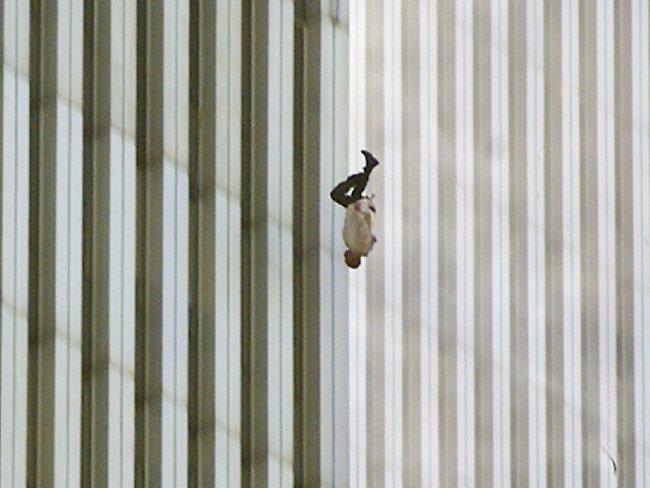 |
| A controversial photograph showing a man falling from the World Trade Center. This photograph was taken to show Americans why they should never forget the events of 9/11 |
 |
| A more large scale map of the area of Operation Neptune Spear. This shows specific information about the areas, as well as locations and relativity. |
 |
| A famous photograph taken of the "Situation Room", the room of people watching the progress of Operation Neptune Spear |
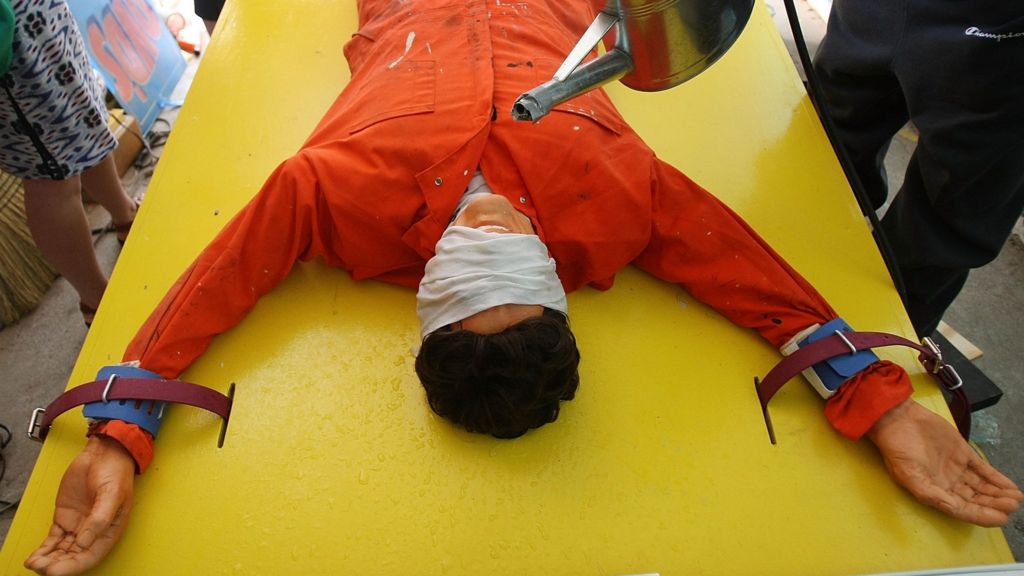 |
| A picture of the torture method called "waterboarding" being used |
 |
| An actual map made by the CIA showing the location of Operation Neptune Spear |
 |
| Pictures taken of one of the two modified Black Hawks that crashed upon entry |
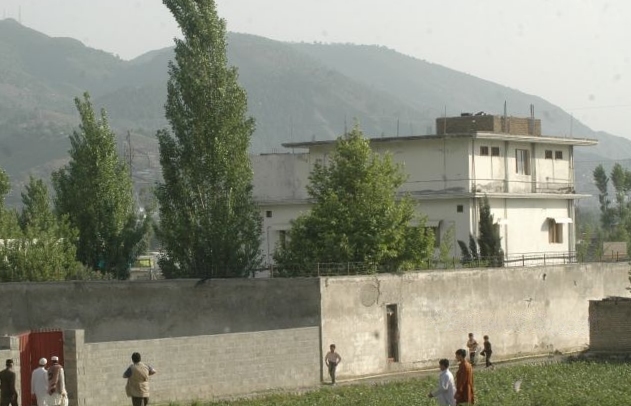 |
| A photograph taken of the compound that housed the infamous Osama Bin Laden. |
Monday, May 15, 2017


Thursday, April 20, 2017
Propaganda
1. Propaganda, in my words, is advertisement that uses specific elements to persuade audiences into doing whatever they say.
2. Link the particular doctrines or principles propagated by an organization or movement.
3. Link In the first image, the colors are very dull and almost sad. The artwork is in a sort of style that seems to suggest gothic tragedy. The font used is very bold and "in your face".
With the second poster, there is no color except for the cross in the background. The poster seems to suggest religious imagery.
The third poster draws attention to the dead soldier in the middle, and the red text at the bottom making the audience feel guilty about not buying liberty bonds. It also emphasizes the harshness of battle with the art style.
4. The artist of the first poster is very clearly to get people to buy government bonds, but they are specifically intending to make the audience feel bad for mothers and children.
The second poster is also presented with a clear intent: to guilt people into giving up "every cent they have" to the government for the war. They also have a target audience: religious people and women.
The third poster has a clear target audience of men, and they also use the guilt tactic to make people feel like they need to give money to the government.
5. The target audience of the first poster is people who have a heart for mothers and children, as well as people who are mothers or who has children.
The second poster seems to target religious people and women.
The third poster is very clearly targeting men, as the dead male soldier is supposed to trigger males into feeling sympathy for him.
6. I feel that taxpayers' money should not be used, mainly because it is not my duty as an American to be convinced of something, therefore I should not have to pay for it.
7. I think that the federal government felt the need to invest in propaganda at the time because they felt that there was a significant amount of convincing to be done. Most of the country was divided by the morality of the situation.
2. Link the particular doctrines or principles propagated by an organization or movement.
3. Link In the first image, the colors are very dull and almost sad. The artwork is in a sort of style that seems to suggest gothic tragedy. The font used is very bold and "in your face".
With the second poster, there is no color except for the cross in the background. The poster seems to suggest religious imagery.
The third poster draws attention to the dead soldier in the middle, and the red text at the bottom making the audience feel guilty about not buying liberty bonds. It also emphasizes the harshness of battle with the art style.
4. The artist of the first poster is very clearly to get people to buy government bonds, but they are specifically intending to make the audience feel bad for mothers and children.
The second poster is also presented with a clear intent: to guilt people into giving up "every cent they have" to the government for the war. They also have a target audience: religious people and women.
The third poster has a clear target audience of men, and they also use the guilt tactic to make people feel like they need to give money to the government.
5. The target audience of the first poster is people who have a heart for mothers and children, as well as people who are mothers or who has children.
The second poster seems to target religious people and women.
The third poster is very clearly targeting men, as the dead male soldier is supposed to trigger males into feeling sympathy for him.
6. I feel that taxpayers' money should not be used, mainly because it is not my duty as an American to be convinced of something, therefore I should not have to pay for it.
7. I think that the federal government felt the need to invest in propaganda at the time because they felt that there was a significant amount of convincing to be done. Most of the country was divided by the morality of the situation.
Thursday, April 13, 2017
Hawaiian: The Legend of Eddie Aikau
From what our history textbooks may convey to us, we receive the American perspective of imperialism. But from the film, we get a new perspective: the point of view from the colonies themselves. This is incredibly interesting because while we might think that the annexation of Hawaii was beneficial, there was another side that was rather closeted. With this film, we get a chance to understand what life was like as a native Hawaiian during the profusion of Americans claiming their land. From Eddie Aikau's perspective, we get to see how his surfing life was affected by these newcomers, and learn that for every story, there is another side that is not always as apparent.
 |
| Eddie Aikau surfing on Waimea Bay |
Subscribe to:
Posts (Atom)