Tuesday, September 27, 2016

Glory and Twelve Years In Class Essay

           It is possible to develop skills in analyzing and learn more about a specific subject by watching movies and doing a little research. While movies are a different form of media than books or novels, this does not mean that it is, in any way, lesser than a book. Movies are made to give the audience a more tangible grasp on the concept that is being illustrated by giving you more than just words on a page. It gives you the ability to actually see with your own eyes and hear with your own ears what is happening, rather than having to use your imagination to fill in the blanks. And while this does require your film to be as historically accurate as possible, if done right film could be more informative and productive than literature. To further delve into this idea of productivity in books and movies, we will be taking a look at two different historical films, Glory and 12 Years a Slave.
            12 Years a Slave was originally a novel written by Solomon Northup, a freed black man who was kidnapped and sold into slavery for twelve years in 1841. It was then made into a film in 2013. The movie was not made for the sole purpose of entertainment, but rather to educate people further than the autobiography. While the book provided the journey inside the mind of Northup, the movie provided a more tangible "version" of the story. The audience could see the way that people were treated in those times, rather than just reading it on paper. They could hear the struggles and pains of a slave during those times, rather than just reading it. It provides a stronger connection between the characters and the audience, which further helps the audience grasp the gravity of what was going on back then. The only downside to making a movie from the autobiography would be formatting issues. The director has to make a decision on what he deems important and crucial to be represented in the movie, which can only last a couple of hours. Steve McQueen, the director for 12 Years a Slave, states that he had to change the layout for the movie, as not to exhaust the viewer from the constant turmoil of being a slave for twelve years. Changing the layout of the book for the film is not nearly as harmful as changing the actual information that is crucial to understanding and empathizing with what was going on at that time. Also, this was an account of a single experience of kidnapping and selling slaves. This was not the only instance of this happening. According to the New York Daily News, "audiences should realize that the kidnapping of northern free blacks was common." This indicated that the hard evidence should vary within each individual situation. If the movie was made about an event that only happened once in history, there is more of a demand for factual evidence.
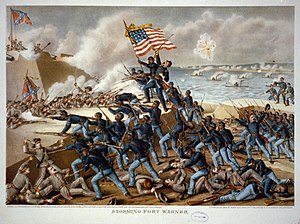
            Glory is a film made about the 54th regiment during the Civil War, the first regiment composed of African Americans. For this film, there was no novel to reference when making historical claims, so they had to go on historical evidence that they researched. Now this film was made about a singular incident, so there is no other way to interpret this. It calls for completely factual evidence, unless it is supposed to be a film purely based on entertainment. In this instance, the film does meet this requirement, giving the viewers actual dates and locations where these instances happened. But there are some things that the director has to change in order to make the film interesting while still keeping it factual and historically accurate. The first battle in the film (the Battle of Antietum) is portrayed in only a couple minutes, when in fact, the battle for much longer than this. The director cannot put in every single bit of information and every event at full length, or else the movie would last for ages. This is why in order to understand the subject, you have to do a little research on your own.
              Movies are not a credible source for factual information when composing an essay or report on a historic field. However, they provide a phenomenal background, and they allow the viewers to be able to empathize with the historical figures a lot easier than just reading a textbook or novel. If you conduct your own research for the facts, a movie is a great way to paint the picture for you and turn factual information into a story that sticks with you. This is something that memorizing information from a textbook cannot provide. A movie gives the information emotion, which is also allows empathy, a quality that all who call themselves historians should have. To learn more about what it was like in the past, we must put ourselves in the shoes of those in the past. And movies are the prime form of media to provide that for its viewers.


This provided me with the background information on how historically accurate 12 Years a Slave was. 
This article delved into what decisions the director made in making the film 12 Years a Slave
This article showed me how the director had to change things in order to make an entertaining film.
Ashbrook (Ashland University) - “History and the Movies: The Patriot and Glory
This was a review from Ashland University explain the historical inaccuracies of Glory and why this movie was successful

This was a history archive that I used to confirm most of the historical statements made in the film Glory
solomon northup.jpg
The films depiction of Solomon Northup from 12 Years a Slave
flickr.com
A visual aid to show the importance of empathy
Image result for movies vs books
A depiction  of the differences between seeing a movie and reading a book


Glory and Twelve Years In Class Essay

           It is possible to develop skills in analyzing and learn more about a specific subject by watching movies and doing a little research. While movies are a different form of media than books or novels, this does not mean that it is, in any way, lesser than a book. Movies are made to give the audience a more tangible grasp on the concept that is being illustrated by giving you more than just words on a page. It gives you the ability to actually see with your own eyes and hear with your own ears what is happening, rather than having to use your imagination to fill in the blanks. And while this does require your film to be as historically accurate as possible, if done right film could be more informative and productive than literature. To further delve into this idea of productivity in books and movies, we will be taking a look at two different historical films, Glory and 12 Years a Slave.
            12 Years a Slave was originally a novel written by Solomon Northup, a freed black man who was kidnapped and sold into slavery for twelve years in 1841. It was then made into a film in 2013. The movie was not made for the sole purpose of entertainment, but rather to educate people further than the autobiography. While the book provided the journey inside the mind of Northup, the movie provided a more tangible "version" of the story. The audience could see the way that people were treated in those times, rather than just reading it on paper. They could hear the struggles and pains of a slave during those times, rather than just reading it. It provides a stronger connection between the characters and the audience, which further helps the audience grasp the gravity of what was going on back then. The only downside to making a movie from the autobiography would be formatting issues. The director has to make a decision on what he deems important and crucial to be represented in the movie, which can only last a couple of hours. Steve McQueen, the director for 12 Years a Slave, states that he had to change the layout for the movie, as not to exhaust the viewer from the constant turmoil of being a slave for twelve years. Changing the layout of the book for the film is not nearly as harmful as changing the actual information that is crucial to understanding and empathizing with what was going on at that time. Also, this was an account of a single experience of kidnapping and selling slaves. This was not the only instance of this happening. According to the New York Daily News, "audiences should realize that the kidnapping of northern free blacks was common." This indicated that the hard evidence should vary within each individual situation. If the movie was made about an event that only happened once in history, there is more of a demand for factual evidence.
            Glory is a film made about the 54th regiment during the Civil War, the first regiment composed of African Americans. For this film, there was no novel to reference when making historical claims, so they had to go on historical evidence that they researched. Now this film was made about a singular incident, so there is no other way to interpret this. It calls for completely factual evidence, unless it is supposed to be a film purely based on entertainment. In this instance, the film does meet this requirement, giving the viewers actual dates and locations where these instances happened. But there are some things that the director has to change in order to make the film interesting while still keeping it factual and historically accurate. The first battle in the film (the Battle of Antietum) is portrayed in only a couple minutes, when in fact, the battle for much longer than this. The director cannot put in every single bit of information and every event at full length, or else the movie would last for ages. This is why in order to understand the subject, you have to do a little research on your own.
              Movies are not a credible source for factual information when composing an essay or report on a historic field. However, they provide a phenomenal background, and they allow the viewers to be able to empathize with the historical figures a lot easier than just reading a textbook or novel. If you conduct your own research for the facts, a movie is a great way to paint the picture for you and turn factual information into a story that sticks with you. This is something that memorizing information from a textbook cannot provide. A movie gives the information emotion, which is also allows empathy, a quality that all who call themselves historians should have. To learn more about what it was like in the past, we must put ourselves in the shoes of those in the past. And movies are the prime form of media to provide that for its viewers.


This provided me with the background information on how historically accurate 12 Years a Slave was. 
This article delved into what decisions the director made in making the film 12 Years a Slave
This article showed me how the director had to change things in order to make an entertaining film.
Ashbrook (Ashland University) - “History and the Movies: The Patriot and Glory
This was a review from Ashland University explain the historical inaccuracies of Glory and why this movie was successful

This was a history archive that I used to confirm most of the historical statements made in the film Glory
solomon northup.jpg
The films depiction of Solomon Northup from 12 Years a Slave

flickr.com
A visual aid to show the importance of empathy
Image result for movies vs books
A depiction  of the differences between seeing a movie and reading a book


Wednesday, September 14, 2016

Reflection on Paraphrasing Practice

In this activity, I learned how to paraphrase cohesively and properly, as well as learning how and when to use it. It is used when explaining the general idea of a certain passage, but not copying the passage word for word. It is a nice informal "go between" for quoting and summarizing. I also learned how to correctly give credit where credit is due.

I understand these things:

Only use a direct quote when it adds power and style to my writing.
Always make it clear, from context, that I understand the full meaning of the quote.
Whether I quote or paraphrase, I must always be transparent about the source and how I'm using it .
If i use another author's exact words or phrases, to any extent, I have to use quotation marks and give credit.
If I use another author's presentation of facts or ideas, but put their ideas in my own words, (paraphrase) I better have a good reason for doing so, and I MUST give credit.
Hyperlinking is so easy, there is no excuse for not being transparent about my sources

Practicing Incorporating a Quotation

While watching the movie Glory, I felt like I was learning a decent amount about the 54th Massachusetts, but after reading the review by Ashbrook University, my opinion was changed. They explained that the movie "contains numerous historical inaccuracies", and that the film actually was not entirely true. It opened my eyes to the fact that not everything you see is true.

Monday, September 12, 2016

Paraphrase Practice

"Glory, the epic account of the 54th Massachusetts, one of the first all-black regiments in the Civil War, contains numerous historical inaccuracies. Some of them are minor. For instance, the regiment’s climactic assault against Battery Wagner, the Confederate stronghold guarding Charleston harbor, actually took place from south to north, rather than north to south as depicted in the movie." 
 (excerpt from Ashbrook University review of the movie Glory)

My paraphrase:
The movie Glory, a tribute to the first account of an African-American regiment during the Civil war called the 54th Massachusetts, was not very historically accurate. Some of the mistakes are not major. For example, the iconic attack on Fort Wagner actually was fought from the south to the north, not the north to the south as is shown in the film.

Friday, September 9, 2016

Film Review


This is the review that I'm going to be Review that I will be looking at.
I am working with Huston Morring and Margaret Bryant

Friday, September 2, 2016

Reflection

Recently, we have discussed how to find proper evidence and support our arguments with said evidence. In discussing this, it has come to my attention how little people site their sources today. I don't necessarily mean in schools, but rather on things like social media and new outlets. Using Twitter as an example, people can make any political statement they want and, while it may or may not be credible, are not required or even encouraged to site their sources. For example, Bill O'Reilly saying that "slaves were well fed" and not even giving any factual evidence to support that. This is slightly disappointing, seeing as he said this on a national news channel for millions to see. This shows that people need to challenge the statements of others more (in a respectful way, of course). People get away with indoctrinating others by telling them the stupidest things. And yes, this country does support freedom of speech, but that will inevitably lead to incorrect information being spread around and believed.
Image result for effects of social media